
The Italian Communist Party (Partito Comunista Italiano – PCI) was one of the most influential political movements in modern European history. Founded in the early 20th century, the party played a decisive role in shaping Italy’s political, social, and cultural landscape. Unlike many communist parties aligned strictly with Soviet ideology, the Italian Communist Party developed a more democratic and independent path, which later became known as Eurocommunism. As a result, it gained massive public support, especially among workers, intellectuals, and youth.
During and after World War II, the party emerged as a powerful force advocating equality and democratic reforms. Even though it officially dissolved in the early 1990s, its legacy continues to influence Italian politics today. To truly understand Italy’s political evolution, it is essential to explore the history, ideology, and impact of the Italian Communist Party.
Italian Communist Party Background and Political Vision
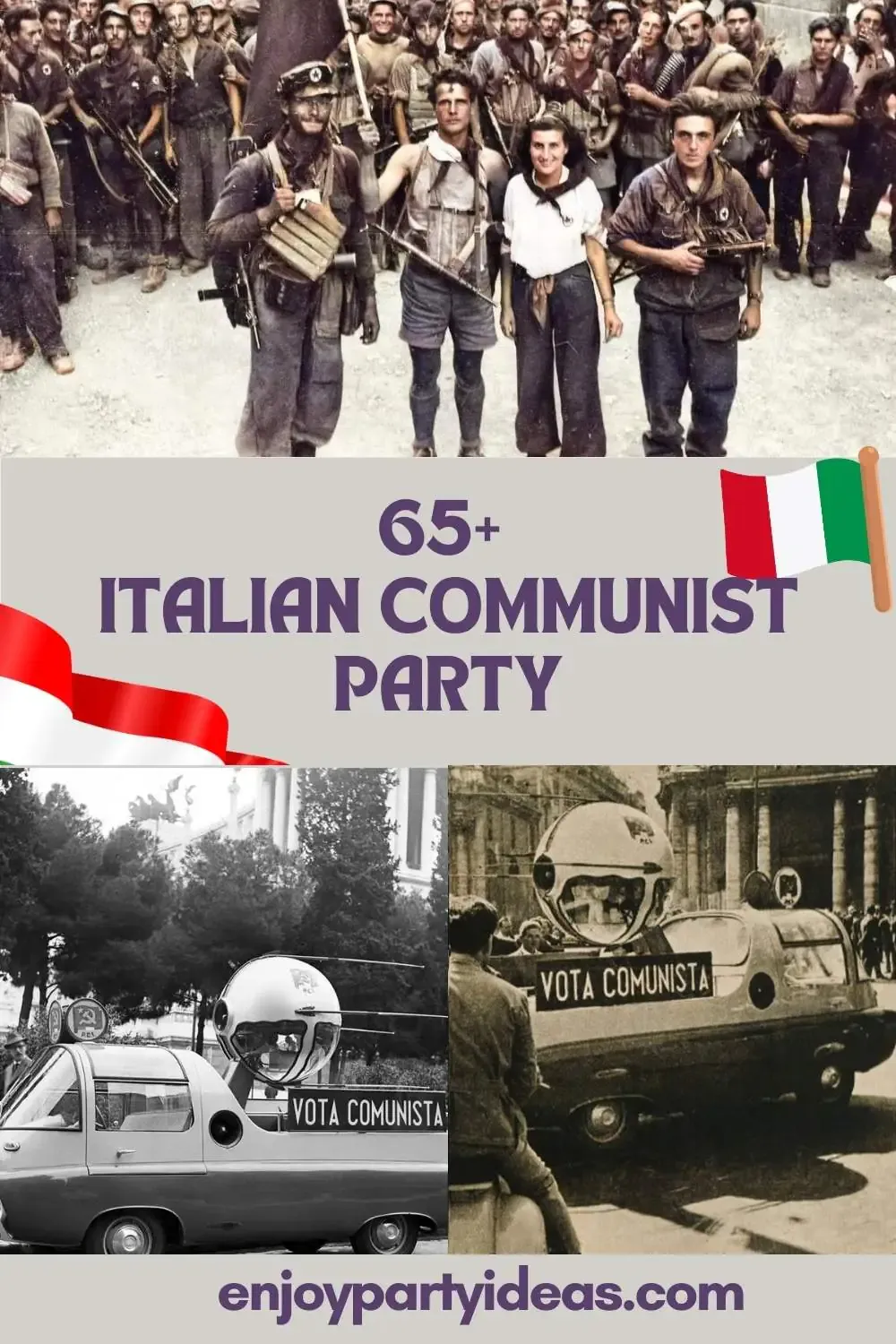
Before exploring specific aspects, it is important to understand that the Italian Communist Party was built on strong ideological foundations combined with practical political strategies. Instead of focusing solely on revolution, the party emphasized democratic participation, workers’ rights, and social reforms. Consequently, it became one of the largest communist parties in Western Europe. Now, let’s explore key ideas, movements, and milestones related to the Italian Communist Party.
Early Formation and Ideological Roots

-
Foundation in 1921
The Italian Communist Party was founded in Livorno after splitting from the Italian Socialist Party. This marked the beginning of organized communism in Italy. -
Influence of Marxism-Leninism
Initially, the party followed Marxist-Leninist ideology, focusing on class struggle and workers’ control of production. -
Antonio Gramsci’s Role
Antonio Gramsci became one of the party’s most influential thinkers, shaping its intellectual foundation. -
Opposition to Fascism
From the start, the Italian Communist Party strongly opposed Benito Mussolini’s fascist regime. -
Underground Resistance Movement
During fascist rule, the party operated underground, organizing resistance and spreading anti-fascist ideas. -
Imprisonment of Leaders
Many party leaders, including Gramsci, were imprisoned, strengthening the party’s image of sacrifice. -
Worker-Centered Politics
The party focused heavily on factory workers and labor unions. -
Class Consciousness Promotion
It encouraged workers to understand and challenge capitalist exploitation. -
Early International Connections
The party maintained ties with other communist movements across Europe. -
Survival Under Repression
Despite heavy repression, the Italian Communist Party survived and reorganized.
Post-War Growth and Mass Support

-
Role in Anti-Fascist Resistance
The party gained massive respect for its role in defeating fascism during World War II. -
Legal Recognition After 1945
After the war, the party became a legal and influential political force. -
Strong Electoral Presence
The Italian Communist Party consistently secured millions of votes in national elections. -
Support from Working Class
Industrial workers formed the backbone of the party’s voter base. -
Appeal to Intellectuals
Writers, artists, and academics openly supported the party. -
Trade Union Influence
The party had strong control over major labor unions. -
Promotion of Social Welfare
It advocated healthcare, education, and workers’ protections. -
Municipal Governance
The party governed several Italian cities effectively. -
Grassroots Organization
Local party branches strengthened community engagement. -
Women’s Participation
The party encouraged women’s political involvement more than many rivals.
Eurocommunism and Political Innovation
-
Shift from Soviet Alignment
The Italian Communist Party gradually distanced itself from Soviet control. -
Birth of Eurocommunism
It promoted a democratic form of communism adapted to Western Europe. -
Commitment to Democracy
The party openly supported parliamentary democracy. -
Respect for Civil Liberties
Freedom of speech and press were emphasized. -
Historic Compromise Strategy
The party sought cooperation with Christian Democrats for stability. -
Leadership of Enrico Berlinguer
Berlinguer modernized the party’s image and ideology. -
Economic Reform Focus
The party proposed reforms rather than radical nationalization. -
Ethical Politics Emphasis
Corruption-free governance became a major theme. -
Environmental Awareness
Early environmental protection ideas were promoted. -
European Integration Debate
The party supported cooperation within Europe while maintaining sovereignty.
Cultural and Social Influence

-
Impact on Italian Culture
The party influenced literature, cinema, and theater. -
Promotion of Education
Education was seen as a tool for social equality. -
Youth Movements
Young Italians were mobilized through party-affiliated organizations. -
Media and Publications
Party newspapers spread ideological awareness. -
Film and Art Support
Communist ideals appeared in post-war Italian cinema. -
Grassroots Cultural Centers
Local cultural hubs promoted political education. -
Workers’ Festivals
Public festivals strengthened community bonds. -
Anti-Imperialist Views
The party opposed global imperialism and war. -
Peace Advocacy
It actively supported peace movements during the Cold War. -
Social Equality Campaigns
Gender and class equality were central themes.
Decline, Transformation, and Legacy

-
Cold War Pressures
Global politics limited the party’s national power. -
NATO Membership Challenges
Italy’s NATO role conflicted with communist ideology. -
Internal Ideological Debates
Disagreements weakened party unity. -
Collapse of Soviet Union Impact
The fall of the USSR deeply affected the party. -
Official Dissolution in 1991
The Italian Communist Party formally dissolved. -
Transformation into New Parties
It evolved into democratic left-wing parties. -
Continued Influence on Left Politics
Former members still shape Italian politics. -
Legacy of Social Reforms
Labor rights remain a lasting contribution. -
Academic Importance
Scholars continue to study the party’s ideology. -
Symbol of Democratic Socialism
The party represents a unique communist model.
Modern Relevance and Lessons

-
Model for Left-Wing Democracy
It showed communism could coexist with democracy. -
Focus on Ethical Leadership
Integrity remains a lesson for modern politics. -
Grassroots Engagement Strategy
Community politics proved effective. -
Balancing Ideology and Reality
Pragmatism strengthened public trust. -
Resistance to Authoritarianism
The party’s anti-fascist stance remains relevant. -
Social Justice Advocacy
Equality and fairness remain core values. -
Labor Movement Inspiration
Modern unions draw lessons from its strategies. -
Political Education Importance
Educated voters strengthened democracy. -
Adaptability Over Time
Ideological flexibility ensured long survival. -
Historical Identity of Italy
The party remains part of Italy’s political identity. -
Global Political Influence
Inspired left-wing movements worldwide. -
Reminder of Collective Power
Mass participation shaped national politics. -
Symbol of Peaceful Change
Change through ballots, not violence.
Ultimately, the Italian Communist Party represents one of the most fascinating political experiments of the 20th century. By combining socialist ideals with democratic values, it created a model that differed significantly from traditional communist movements. Although the party no longer exists in its original form, its influence is still visible in Italy’s labor laws, political culture, and left-wing movements.

Hi, I’m Serena Bruce, the creative force behind EnjoyPartyIdeas.com!
As a passionate event planner and long-time lover of all things festive, I’ve dedicated my life to making celebrations unforgettable. With years of experience planning everything from kids’ birthday bashes to elegant weddings and themed parties, I’ve learned one important thing—every party deserves to be memorable, meaningful, and fun.